How to Crochet for Beginners: Step-by-Step Guide (2026)
Learn how to crochet from zero: what to buy, how to hold the hook, make a slip knot, chain and single crochet, and finish your first project this week.
By Ayoub Farid · · 5 min read
Crochet looks complicated, but it's built from one simple idea: pull a loop of yarn through another loop with a hook. Every stitch, from a dishcloth to a lace shawl, is a variation of that move. If you can learn to make a chain and a single crochet, you can make a scarf, a coaster or a blanket.
This guide takes you from "I've never held a hook" to a finished first project. Read it once, then work through it with yarn in your hands.
What you need to start crocheting
You need very little, and it's cheap.
Yarn
Buy one ball of smooth, light-colored, worsted weight (weight 4) yarn. Acrylic or cotton are both fine.
- Smooth, so you can see the stitches (avoid fluffy, fuzzy or "eyelash" yarn).
- Light-colored, because dark yarn hides stitches.
- Worsted weight, the most common thickness: big enough to see, not so bulky that it's clumsy.
See our yarn weight chart if labels confuse you.
Hook
A 5 mm (H-8) or 5.5 mm (I-9) hook pairs well with worsted yarn. Ergonomic hooks with a soft handle are kinder to your hand if you crochet for long sessions. More in our hook size guide.
Everything else
- Small scissors
- A blunt tapestry needle for weaving in ends
- A few stitch markers (paper clips or a scrap of contrasting yarn work too)
How to hold the hook and yarn
There's no single correct way, but two grips are most common:
- Pencil grip: hold the hook like a pencil, with the hook pointing toward you.
- Knife grip: hold it like a table knife, with your palm over the handle.
Try both and keep the one that feels natural. With your other hand, drape the yarn over your index finger and pinch the work between your thumb and middle finger. The index finger controls tension, meaning how tightly the yarn feeds. Even tension is what makes stitches look neat, and it comes with practice, not effort.
Step 1: Make a slip knot
- Make a loop with the yarn, with the tail end hanging behind.
- Reach through the loop, grab the working yarn (the end attached to the ball) and pull it through to make a new loop.
- Put that loop on your hook and pull the tail gently to snug it. It should slide on the hook, not strangle it.
Step 2: Crochet a chain (ch)
The chain is the foundation of almost every crochet project.
- Yarn over (yo): wrap the working yarn over the hook from back to front.
- Pull through: catch the yarn with the hook and pull it through the loop on your hook.
That's one chain. Repeat 20 times. Your chains should be about the same size. If they're so tight that the hook won't go back in, loosen your grip on the yarn.
Counting chains: each V shape on the front is one chain. The loop on your hook and the slip knot don't count.
Step 3: Single crochet (sc)
Single crochet is the first real stitch, and the one most beginner patterns use.
- Skip the first chain from the hook. Insert the hook into the second chain from the hook.
- Yarn over and pull up a loop. You now have 2 loops on the hook.
- Yarn over again and pull through both loops. One single crochet made.
- Insert the hook into the next chain and repeat to the end.
With 20 chains, you'll have 19 single crochets.
Step 4: Turn and work row 2
- At the end of the row, chain 1 (the turning chain) and turn the work like a page of a book.
- Work one single crochet into each stitch of the previous row, inserting the hook under both top loops of each stitch (they look like a sideways V).
- Don't work into the turning chain.
Count your stitches at the end of every row. You should have 19 every time. If the count changes, the edges will slant, the most common beginner problem. See common crochet mistakes.
Work 10 rows. Congratulations: that's a swatch, and you now know the most important skill in crochet.
Step 5: Fasten off and weave in ends
- After the last stitch, cut the yarn, leaving a 15 cm (6 in) tail.
- Yarn over and pull the tail all the way through the loop on the hook. Tug to tighten.
- Thread the tail onto a tapestry needle and weave it through the stitches on the back, changing direction a couple of times so it can't work loose.
Your next stitches
Once single crochet feels comfortable, learn these in order. Each one is just "more yarn overs":
- Half double crochet (hdc): slightly taller, quick to work.
- Double crochet (dc): twice as tall as sc, the base of granny squares and shells. See our double crochet tutorial.
- Slip stitch (sl st): used to join rounds and move across stitches.
- Magic ring: the start of hats and amigurumi worked in the round. See the magic ring guide.
Our basic crochet stitches guide covers all of them in one place.
Your first projects
Pick a project you'll actually want to finish:
- A coaster (15–30 minutes): instant gratification. Try a crochet coaster pattern.
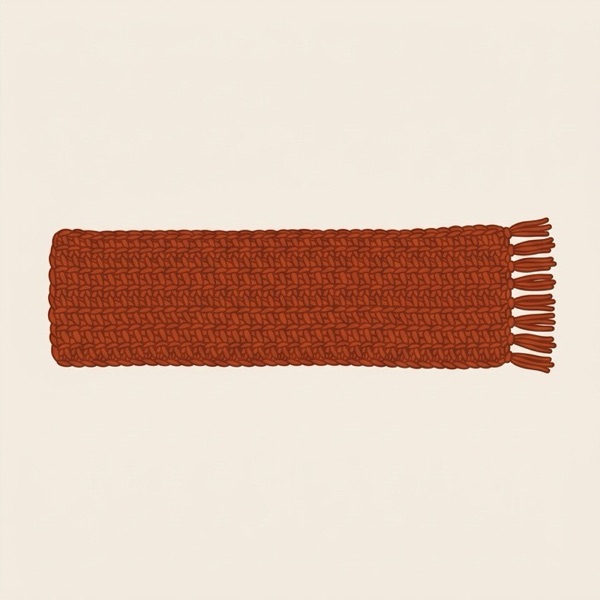
- A scarf: just rows of single or half double crochet, a classic first project. See how to crochet a scarf.
- A granny square: your first project in rounds. See how to crochet a granny square.
More ideas: easy crochet projects for beginners.
How long does it take to learn crochet?
Most people can make a chain and single crochet within an hour or two, finish a coaster or small square in their first week, and follow a simple pattern like a scarf or beanie within a few weeks of regular practice. Fifteen minutes a day beats a three-hour session once a week, because your hands learn the rhythm through repetition.
Learn with HookWise
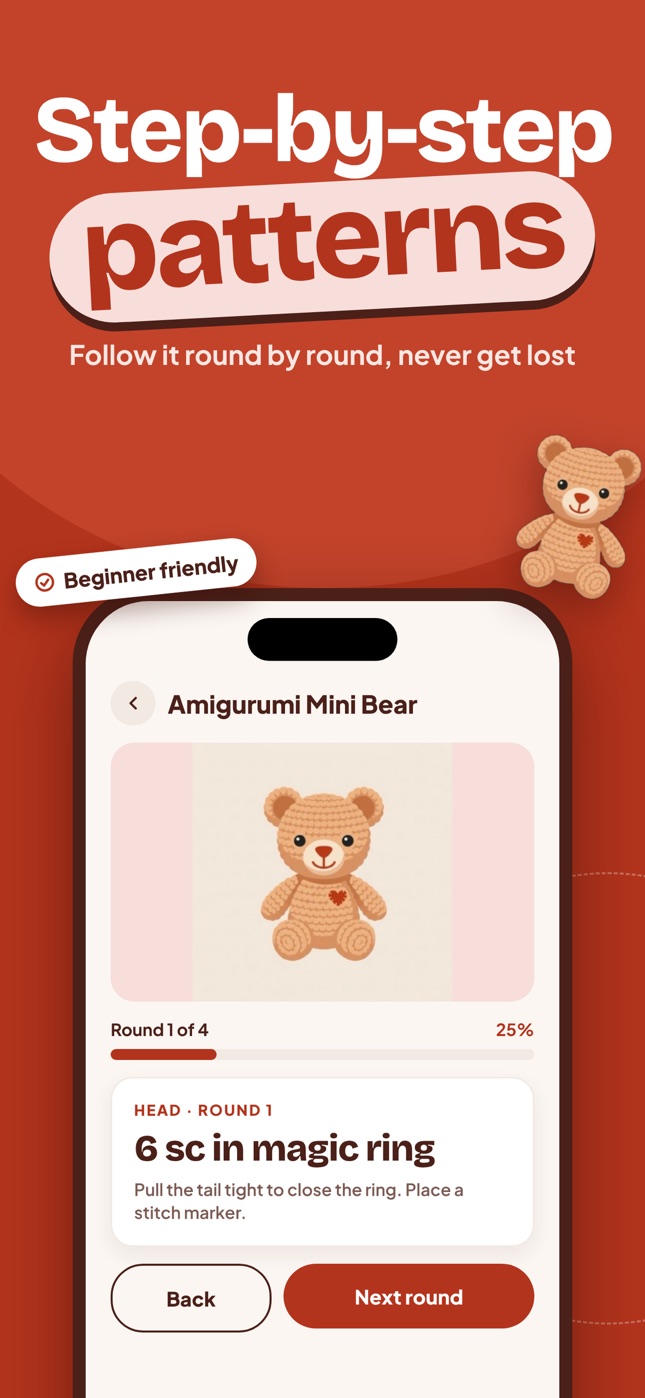
HookWise was built for exactly this stage. A short quiz asks what you want to make and how much you know, then suggests beginner patterns. Each pattern is split into rounds, so you only ever see one instruction at a time, with a progress bar that remembers your place. If an instruction doesn't make sense, ask the built-in AI helper to explain it in plain words.
Frequently asked questions
Is crochet hard to learn?
The first hour is the hardest, because your hands are learning a new movement. After that, crochet is very repetitive: most projects use two or three stitches. Most beginners finish a small project in their first week.
What should I crochet first?
A coaster or small square to practice, then a scarf or granny square. Choose a project made with a smooth, light-colored worsted weight yarn so you can see your stitches.
Is crochet easier than knitting?
Many people find crochet easier to start, because you only have one live loop on the hook, so dropped stitches are rare and mistakes are easy to undo. Both take practice to master.
What size hook should a beginner use?
A 5 mm (H-8) or 5.5 mm (I-9) hook with worsted weight yarn. Larger stitches are easier to see and count while you learn.
Crochet with a coach in your pocket
Learn to crochet with HookWise
94 step-by-step patterns that save your place, AI stitch & yarn identification from one photo, and an AI helper for when you get stuck. Free to download on iPhone.
Free on iPhoneDownload on the App Store